Finance & business Highly Kosher Professionals Q&A
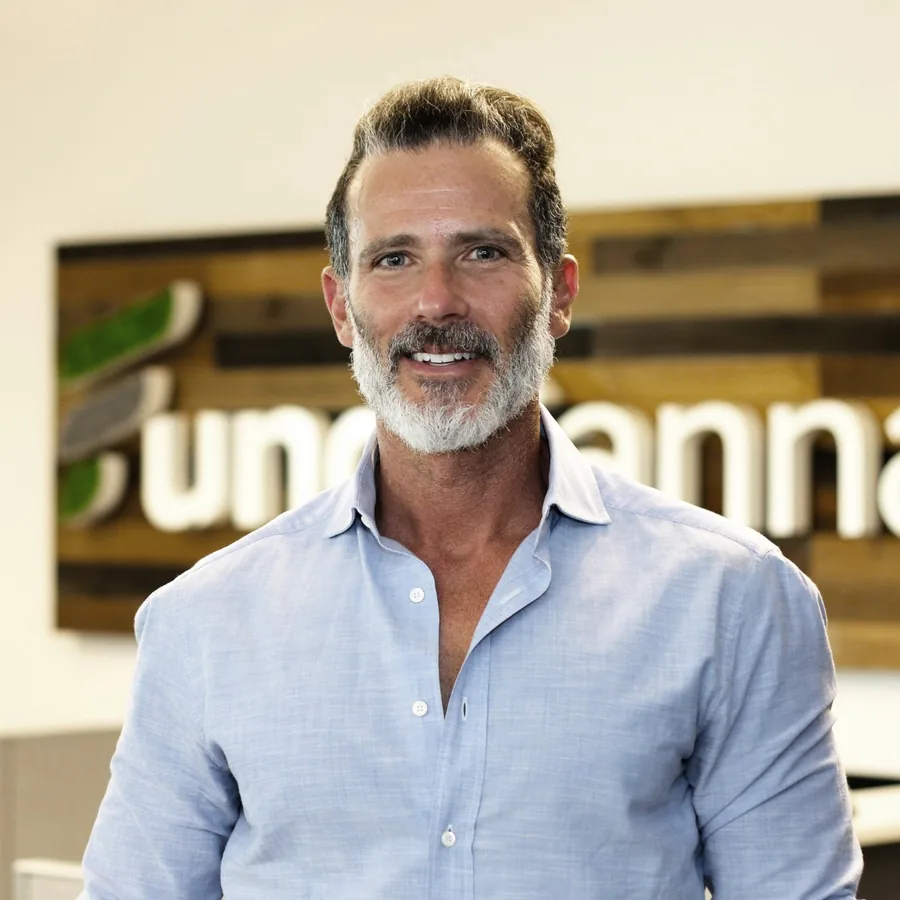
Adam Stettner
FundCanna's founder and CEO on why communication matters more than a business degree, what cannabis taught him about specialty finance, and why federal reform is the starting line, not the finish.
JIW How did studying communication at the University of Maryland, College Park help you develop your business leadership and management skills?
Adam Every friend I know either studied business (or medicine). I felt I would “learn business” by doing it. However, I believed then and now that communication is one of the most underrated skills in business and leadership. The more I understood how best to communicate, the more effective I believed I could be in everything I did. My belief: no matter how great an idea, or how strong you are at whatever your expertise, if you can't effectively communicate your vision, align or convince people to get behind a common objective and inspire them to execute, you're going to struggle, or at a minimum achieve less than if you were strong at communicating.
My education at the University of Maryland helped establish that foundation, but the real education came from doing it: more than 30 years of building businesses, managing people, raising capital and navigating both successes and setbacks.
I've always believed that communication isn't simply about being a good speaker. It's about listening, understanding what motivates people, being transparent and knowing when to challenge someone and when to support them.
As a CEO, I consider one of my most important responsibilities to be clear communication. People perform better when they understand not just what we're trying to accomplish, but why it matters and how their contributions fit into the bigger picture.
JIW Prior to founding FundCanna, what finance roles and businesses did you work in? How did that experience pay off when creating FundCanna?
Adam I've spent most of my professional life at the intersection of finance, entrepreneurship, sales and solving problems for businesses.
I started my career in sales and then on Wall Street. Both gave me an early education in reading people, determining how to solve problems, capital markets, data analysis, risk management and the importance of making disciplined decisions with incomplete or imperfect information.
I then held senior executive roles at two public finance companies, both of which showed me that even large public companies, while incredible at what they do, were at times disorganized and imperfect. In 2008, I started Reliant Funding, a small-business financing company. At Reliant, we employed 250 people and provided approximately $3.5 billion in on-balance sheet funding to more than 100,000 businesses. We underwrote roughly a million files over 14 years. I built the company around the idea that traditional financial institutions often struggle to serve otherwise viable businesses that don't fit neatly into conventional underwriting models. We built our underwriting and financing products around understanding how businesses actually operate, rather than forcing otherwise viable businesses into conventional credit models. The objective was never to compromise credit discipline, but to evaluate risk more intelligently.
That experience was instrumental in creating FundCanna.
When I looked at the cannabis industry, I saw a familiar problem, but on a much larger and more systemic scale. Here was an entire industry that was underserved and navigating a complex and broken regulatory and legal minefield, all with a widespread delinquent accounts receivable problem and a mismatch in the timing of payments versus revenue. At the time, cannabis had tens of thousands of licensed businesses generating billions of dollars in revenue, yet facing extraordinary limitations in so many ways, including access to capital.
I understood the underwriting, technology, servicing and capital markets infrastructure necessary to build a financing company. More importantly, I understood how to evaluate businesses based on their actual operating performance rather than simply whether they fit a traditional banking profile.
FundCanna was an opportunity to apply decades of experience to an industry where the need was enormous and the financial infrastructure was still in its infancy.
JIW What interested you about working with cannabis companies and helping solve their funding and financial needs?
Adam What initially attracted me wasn't cannabis by itself. It was that cannabis had an extraordinary disconnect between the size and legitimacy of the industry and the financial services available to support it.
Imagine building a business in an industry that generates billions in annual sales, employs hundreds of thousands of people and operates under extensive state regulation and federal prohibitions, yet being denied access to many of the basic financial tools that businesses in virtually every other industry take for granted.
That's a fascinating problem for someone who has spent his career in specialty finance.
The more I learned about the industry, the more I became interested in the businesses and the people behind them. Cannabis entrepreneurs are operating in one of the most challenging business environments I've encountered. They face complex regulations, significant tax burdens, pricing pressures, a thriving and competing illicit market, limited banking relationships and restricted access to capital.
And despite all of that, many are building remarkable and sustainable businesses.
We created FundCanna to help address those challenges with financial products designed specifically for how cannabis businesses operate: tools that mimic traditional financing while also supporting this industry in the specific way it operates, which is something banks are very unlikely to ever do. Today, we provide financing across the entire cannabis supply chain and the ancillary businesses that support it: cultivators, manufacturers, brands, distributors and retailers, along with lighting, nutrients and all the industries that support cannabis.
In addition to our core products that work like revolving credit lines, we've developed ReadyPaid, our business-to-business buy now, pay later solution, which helps sellers get paid upfront while allowing buyers to pay over time. This product solves both A/R and A/P issues and has already seen repeat rates north of 300% from clients, proving to us that if you provide the right product for clients, it will be used repeatedly.
I believe the opportunity extends well beyond simply providing funding. We're helping to build financial infrastructure that allows the industry to operate more predictably and efficiently, manage cash flow and grow.
And importantly, we're doing it as a direct provider of capital, with our own underwriting, balance sheet, technology, automation and risk management.
For me, that's what makes this business exciting. We're not simply participating in the cannabis industry. We're directly in it alongside our clients. This is all we do: helping address one of the structural challenges that has constrained the cannabis industry’s growth and development.
JIW How does your Jewish identity play a role in your everyday life and your professional life? How does it influence your personal life and work as well?
Adam I think our identities influence how we approach life in ways that aren't always obvious, regardless of background. For me, being Jewish is a connection to family and my family’s history. It gives perspective on being judged and misunderstood, and on the fragility of culture and community. It emphasizes the importance of education, perseverance and a sense of personal responsibility.
I've always placed tremendous importance on family and on building something meaningful, whether that's raising children, creating businesses or helping other people succeed.
Professionally, I believe in treating people fairly, which often means taking the time to understand them, or at least why they might feel as they do. It also means honoring commitments and understanding that reputation and integrity are built over decades but can be damaged in moments.
I believe in questioning conventional thinking. Throughout my career, I've been drawn to industries and opportunities where the established approach wasn't necessarily the right one. There's something meaningful to me about being willing to challenge assumptions, ask difficult questions and find better solutions.
I don't think those values are exclusive to Judaism, but I do believe they are consistent with the traditions and principles that have shaped Jewish communities for generations. I think all cultures have periods or examples of being misunderstood or judged. It is important to me that I lead with intent to understand and follow through.
Ultimately, I want my children to understand that success isn't simply measured by financial achievement. It's also measured by the relationships you build, the way you treat others, and what you contribute.
JIW Why is being Jewish special to you? And in your opinion, what are your favorite or the most meaningful holidays to celebrate?
Adam Being Jewish is the connection to something much larger than myself. There's an extraordinary desire for continuity in Jewish history. Across generations, countries and vastly different circumstances, Jewish families work to maintain traditions, a sense of community and a commitment to passing their identity and values to the next generation.
My grandparents on my mother’s side both escaped the Holocaust by fleeing Germany. My Oma’s family all perished; of all the branches and extensions in her family, she was the only one that made it out. My Opa was fortunate to leave with his mother and sisters, losing his father and extended family. My grandparents met on the boat from Germany to NYC. They fell in love and had my mother. My father’s dad escaped Austria, but also lost the majority of his family. This was never a topic we discussed at length in our family. My grandparents never wanted to discuss their experience, and I understand why.
I had the opportunity to spend time at Ellis Island, arriving for a private meeting with a docent by boat, pulling up just like they did. I followed the process they would have followed, and we traced my Oma and Opa’s journey. I sat for an hour in the room where they were processed and admitted to the United States, thinking about how they and so many others must have felt in that moment.
My pride in Judaism comes mostly from a desire to honor my grandparents, their pain and their resilience, their quiet strength, and also to honor their families and others who died horrific deaths.
Importantly, being Jewish extends into my gratitude for this amazing country. America welcomed them and so many others. It sent its young men to Germany and all over Europe, in part to fight to free those who had been wrongly persecuted and judged. This shapes and strengthens my love for the United States and my belief that there is a path toward unity.
Even in humanity's darkest moments, we see extraordinary examples of courage, compassion and people willing to risk everything to help others. I believe we are capable of finding that same humanity without first experiencing tragedy.
I know and appreciate that the most important things I will pass along to my children and others I love aren't material. They're the demonstrations of love, memories, values, traditions and sense of belonging that help shape who they become and guide them through life, both good times and difficult times.
I particularly appreciate the holidays that bring family together and create an opportunity to reflect on what matters. Passover has a powerful message about freedom, strength, resilience and the importance of remembering where we came from. And the High Holidays create an opportunity for reflection, accountability and thinking about how we can become better people.
To me, the most meaningful part of these traditions is the connection between generations and the opportunity to carry something forward. The religion itself means less to me than the moments of reflection and sharing together.
JIW How would federal cannabis reform change the funding and other financial needs of the businesses you serve? Would federal reform mean there are more opportunities for cannabis companies to receive funding and other financial services?
Adam More opportunity, yes, but it is not that simple. I think there's an important distinction between improving access to financial services and eliminating the need for specialized financing.
Federal reform would be enormously beneficial to the cannabis industry, particularly if it reduces the regulatory and tax burdens that have constrained operators for years.
For example, moving cannabis to Schedule III and eliminating the application of Section 280E to qualifying cannabis businesses would be a meaningful development. Many operators currently face effective tax burdens that would be unimaginable in most other industries. Relieving that pressure would improve cash flow, profitability and ultimately creditworthiness. It will be a major step that continues the evolution and progress, and it will undoubtedly improve the landscape for our industry.
But there's a misconception that federal reform will suddenly cause traditional banks to enter the cannabis industry with capital for most businesses. I believe strongly this will not happen. I want to explain why.
First, traditional businesses do not have widespread access to bank or conventional capital. Businesses that have never been illegal and have not been considered “vice industries” get declined by banks at a rate of 75-80%. I started my prior company in 2008, funded non-cannabis businesses for 14 years and reviewed over a million files, because ALL business is underserved by banks. Cannabis businesses will always have a decline rate that exceeds traditional business, no matter the status of federal reform. Look at alcohol, tobacco, firearms, the adult industries and many others. They all see lower approval rates from traditional banks and often rely on specialty funding sources.
Second, rescheduling is not the same as federal legalization. Cannabis businesses will continue to face regulatory complexities, and financial institutions will still have to navigate compliance, risk management and the economics of serving the industry.
Despite what I say above, with federal reform more banks will enter and serve the industry. More non-bank sources will eventually arrive. Credit card networks will loosen their restrictions, and the tools that are both needed and convenient for businesses and clients will come, but with limitations. I believe banks, while excellent at what they do, never fully understand the industries they serve; they create rules, credit criteria and compliance mandates. These are generally and broadly applied to all industries. Clients either fit into their box or they don’t. Most often they do not, regardless of industry.
At FundCanna, we build products around the actual financial needs of cannabis businesses for the long term, regardless of how the regulatory landscape evolves. We have not simply built products because of the absence of traditional banks or current regulation. We built the company to serve THIS industry and will evolve with THIS industry.
Our core financing products work like lines of credit to assist cannabis businesses in managing their capital requirements. ReadyPaid addresses a different challenge, aligning the outflow and inflow of capital to create predictable and scalable growth. Get paid faster, and pay over time as you derive revenue. Banks will never build products like this. Banks didn’t come up with Klarna for consumers. They didn’t create Venmo for consumers. And they are unlikely to build products like ReadyPaid for cannabis, although we already see them wanting to be involved in what FundCanna and ReadyPaid offer, much like they are involved with fintech for traditional industries.
The financing needs of this industry don't disappear with federal reform. In many respects, they become larger as the industry grows, transactions increase and businesses become more sophisticated. FundCanna will be innovating alongside this to meet the industry where we need to be.
I also think reform will create opportunities for greater institutional investment, consolidation and mergers and acquisitions. As the industry matures, access to capital will increasingly become a growth tool: a competitive advantage rather than a survival mechanism.
My view is that the cannabis industry is much closer to the beginning of its financial evolution than the end. We've had roughly a decade of meaningful state-legal commercial activity, but the development of a truly normalized financial ecosystem is still in its early stages.
Federal reform isn't the finish line. It's part of the process of approaching the starting line.
I believe FundCanna, which has now spent years developing specialized underwriting, technology, relationships and industry knowledge, will be well positioned to lead and participate in the next phase of that evolution.